Python for Complete Beginners: A Step-by-Step Roadmap to Your First AI Project
CACyberical Academy · September 10, 2026 · 4 min read
Most people who want to learn Python don't fail because they're not smart enough. They fail because nobody told them what to learn first — so they bounce between YouTube tutorials, get overwhelmed by jargon, and quietly give up around week three.
This post fixes that. Below is the milestone-based roadmap I use with complete beginners: a clear sequence of skills, in the right order, with a plain explanation of why each one matters before you move to the next. By the end, you'll know exactly where you are and what's coming next.
Milestone 1: Get Python Running and Write Your First Line
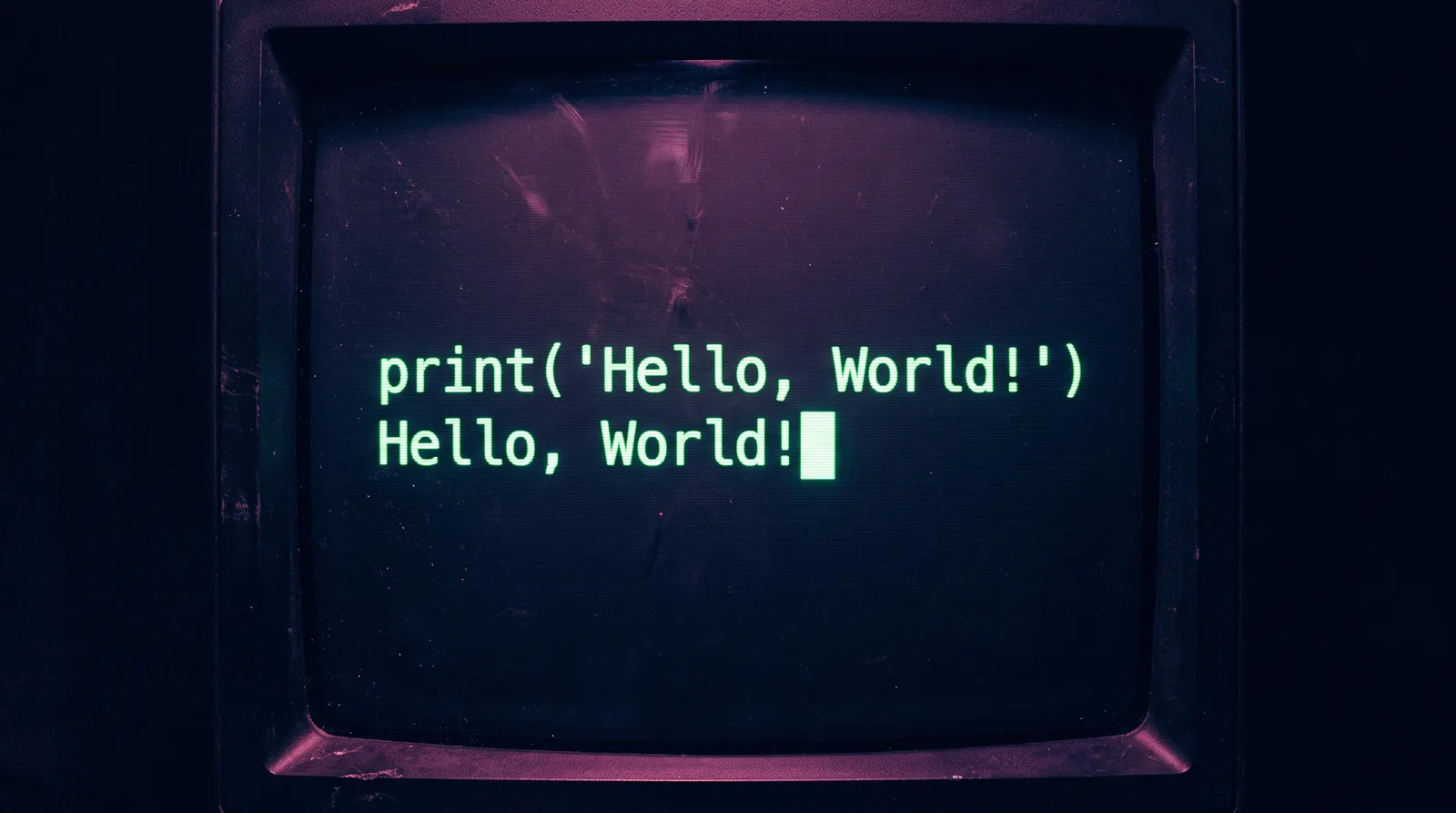
Before anything else, Python needs to live on your machine. Download Python from python.org and install it. Then open a terminal (or use a free browser-based environment like Google Colab if you'd rather skip installation entirely) and type:
print("Hello, World!")
Hit enter. That one line teaches you more than it looks like — you just called a function (print), passed it a string (text in quotes), and got output. That's the skeleton of almost every program you'll ever write.
Why this milestone matters: Everything that follows is built on functions, data, and output. Nail the feel of writing code and running it before you touch anything else.
Milestone 2: Learn How Python Thinks About Data
Python stores and moves information using a handful of core types. Spend real time here — not just reading, but experimenting:
- Strings — text:
"hello","MG Montague","42" - Integers and floats — whole numbers and decimals:
7,3.14 - Booleans — true/false values:
True,False - Lists — ordered collections:
["red", "blue", "green"] - Dictionaries — key-value pairs:
{"name": "Alex", "age": 17}
Practice by creating variables, changing them, and printing them. Ask yourself: what kind of data is this, and which type fits it best?
Why this milestone matters: AI tools live and die on data. If you don't understand how Python holds and transforms information, you'll hit a wall the moment you try to feed data into any model.
Milestone 3: Control What Your Code Does
Now teach your program to make decisions and repeat itself:
score = 85

if score >= 90:
    print("A")
elif score >= 80:
    print("B")
else:
    print("Keep going")
Then learn loops:
for item in ["cat", "dog", "fish"]:
    print(item)
Why this milestone matters: Logic is what separates a script that runs once from a tool that actually responds to the world. Every AI interaction — "if the user says X, do Y" — is built on this foundation.
Milestone 4: Write Your Own Functions
A function is a reusable block of code you define once and call as many times as you need:
def greet(name):
    return f"Hey, {name}! Welcome aboard."

print(greet("Jordan"))
Practice writing small, single-purpose functions. If your function does more than one thing, split it up.
Why this milestone matters: Production AI systems are made of dozens — sometimes hundreds — of functions calling each other. Building that habit early means your code stays readable and fixable when things go wrong.
Milestone 5: Install and Use Your First Library
Python's real power comes from libraries — pre-built toolkits you can pull in with one line. Start with requests, which lets your code talk to the internet:
pip install requests
import requests

response = requests.get("https://api.github.com")
print(response.status_code)
You just made a real network request. That's the same mechanic you'll use to call an AI API.
Why this milestone matters: You don't build AI from scratch — you connect to it. Libraries are the bridge.
Milestone 6: Call an AI API and Build Your First Tool
You're ready. Sign up for an API key at platform.openai.com, install the openai library, and write something like this:
from openai import OpenAI

client = OpenAI(api_key="your-key-here")

user_input = input("Ask me anything: ")

response = client.chat.completions.create(
    model="gpt-4o-mini",
    messages=[{"role": "user", "content": user_input}]
)

print(response.choices[0].message.content)
Run it. Type a question. Watch Python carry your words to an AI model and bring an answer back.
That's your first AI tool. It's real. You built it.
Why this milestone matters: This is the moment the roadmap stops being abstract. Everything before this was preparation for the instant your code connects to something intelligent.
What Comes After This?
From here, you can add memory to your tool (so it remembers what was said earlier), give it a personality, connect it to files or databases, or chain it together with other agents that each do one job well.
That's exactly where my Builders and Innovators programs pick up — going deeper into multi-agent systems, real project architecture, and shipping things that actually scale.
But you don't need any of that yet. Work through these six milestones first, in order, and don't skip ahead. Every shortcut here costs you double later.
The best time to start is now, and the best first step is the one right in front of you.

Want to go deeper than a blog post?
Foundations: Cyberical Academy
Learn to think like a programmer and create like an artist — master Python, AI prompting, generative images, and autonomous agents from the ground up. This is the hands-on creative tech school for the next generation of AI builders.
Start learning — $39/mo